I run Wildcat Muay Thai in Chiang Mai, so yes, I’m biased. I want you to train here. But I’ve also watched hundreds of foreigners go through this exact decision over the years, and I’ve seen people choose Phuket and have an incredible time. The truth is that Chiang Mai and Phuket for Muay Thai training offer two genuinely different experiences. One is not better than the other in all cases. Your choice depends on how long you plan to stay, what your budget looks like, and what kind of environment you train best in.
Here’s the honest version.
At a glance: the quick verdict
Chiang Mai vs Phuket for Muay Thai comes down to six factors:
| Criteria | Chiang Mai | Phuket |
|---|---|---|
| Training cost / month | 8,000–12,000 THB | 12,000–18,000 THB |
| Total monthly budget (training + rent + food) | ~30,000–40,000 THB | ~45,000–65,000 THB |
| Atmosphere | Open-air, family, community | Resort facilities, large international crowd |
| Best for | Long-stay, beginners, DTV applicants | Short trips, elite fighters, beach lifestyle |
| DTV visa support | Yes (several accredited camps) | Limited |
| Nightlife / beach | Mountains, no beach | Beach, active nightlife |
If you have two weeks and want to combine training with beaches and parties, Phuket makes sense. If you plan to train for a month or more and want to actually improve, live affordably, and build a routine, Chiang Mai is the better call.
Training atmosphere: two very different vibes
The difference in atmosphere between these two cities is real, and it matters more than most comparison articles admit.
What Chiang Mai camps feel like
At Wildcat, where I teach Muay Thai in Chiang Mai, training happens in an open-air pavilion surrounded by a garden in Hang Dong, a quiet area south of the city. That setting is not unique to us: many Chiang Mai camps share the same character. Muay Thai training in Chiang Mai tends to be smaller in scale, which means more pad time per session and coaches who actually learn your name.
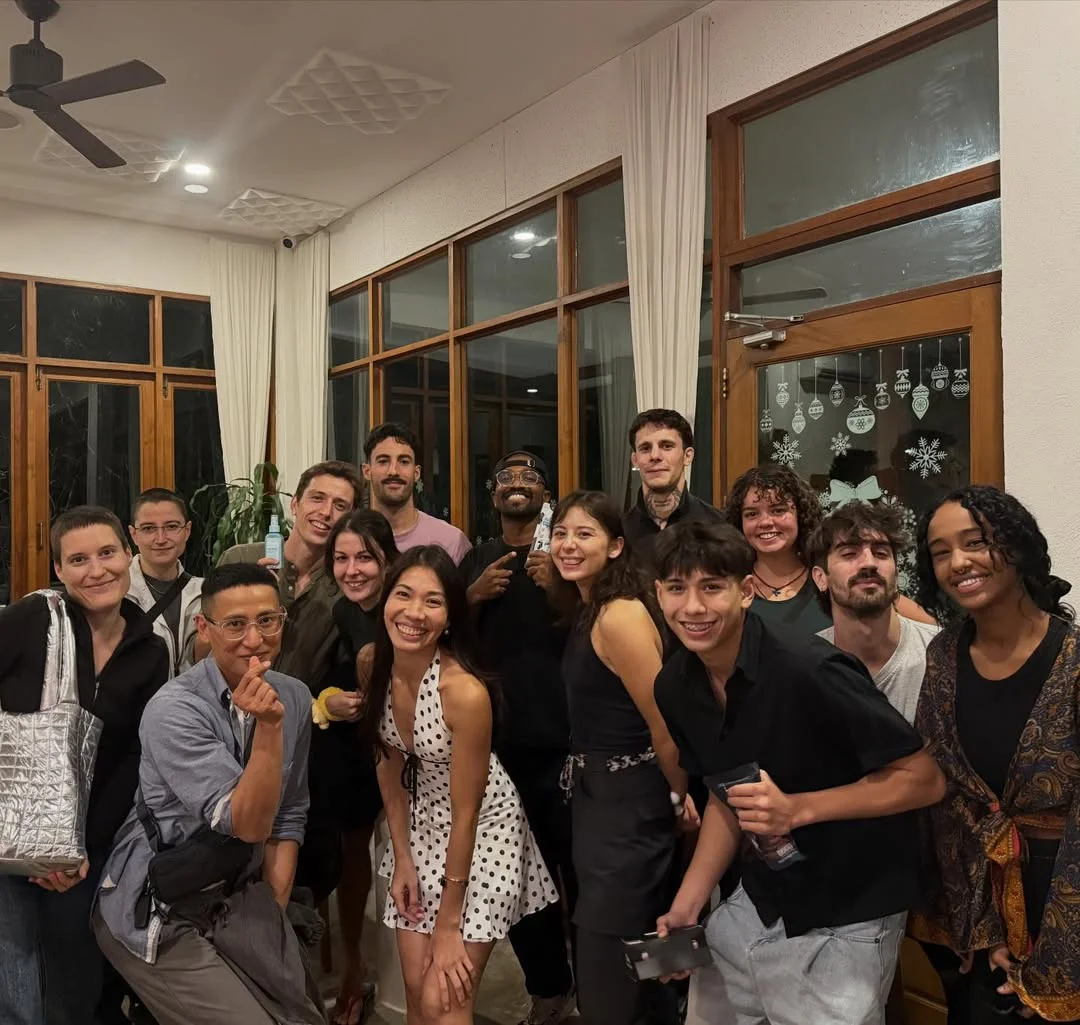
The pace of northern Thailand is different from the south. There is no beach rush, no resort check-in energy. Guests often stay for weeks or months, share meals, go to markets together, and become part of the community. That is the Chiang Mai model.
Smaller classes also mean you are not competing with fifty other trainees for ten minutes of pad work. If you are working on technique, that ratio matters.

What Phuket camps feel like
Tiger Muay Thai in Phuket is the reference point: the world’s largest dedicated destination camp, with 15+ disciplines, hundreds of trainees, and resort-grade facilities. If you want a gym with a pool, a juice bar, and a fight team that competes internationally, Tiger delivers.
The trade-off is volume. At peak season, large Phuket camps can feel like a well-run tourism operation rather than a training home. That is not a criticism: it is a format that works well for people who want a structured, high-intensity two-week block before flying home. The facilities are good. The instruction at the top camps is excellent.
If you find large, loud, international environments motivating, Phuket works perfectly. If you find them intimidating or distracting, Chiang Mai will suit you better.
Cost breakdown: real 2026 numbers
Monthly Muay Thai training costs more in Phuket than in Chiang Mai at every line item.
Chiang Mai (Wildcat Muay Thai figures)
- Drop-in session: 400 THB
- Monthly training package: from 8,000 THB
- Room near camp (studio or shared): 6,000–10,000 THB/month
- Food (street food and local markets): 6,000–9,000 THB/month
- Scooter rental: 3,000 THB/month
- Estimated total: 25,000–35,000 THB/month
These are real prices from our public rate card and conversations with long-stay trainees who live near camp. Food in Chiang Mai is among the cheapest in Thailand. A full meal from a market stall runs 50–80 THB. A proper sit-down restaurant meal is 100–150 THB.
Phuket (Tiger / Sinbi area)
- Monthly training package: 12,000–18,000 THB
- Room near camp: 10,000–18,000 THB/month
- Food: 8,000–15,000 THB/month
- Scooter rental: 3,500 THB/month
- Estimated total: 38,000–60,000 THB/month
Phuket’s tourist infrastructure drives prices up across the board, not just at the gym. Accommodation near the Chalong or Rawai areas, where most of the big camps sit, costs significantly more than a comparable room in Hang Dong or the Nimman area of Chiang Mai.
Over three months, that gap becomes substantial. A trainee spending six months in Chiang Mai instead of Phuket could save 60,000–90,000 THB on identical lifestyle and training quality. That is real money.
The DTV visa: where Chiang Mai has a structural edge
This is the section you will not find in any other comparison article. Most guides stop at “tourist visa works for 30 days.” The reality for long-stay trainees is more nuanced, and the city you choose affects your visa options directly.
How the timeline breaks down:
- Up to 30 days: Tourist exemption works in both cities. No action required.
- Up to 3 months: A tourist visa (TR) covers both Chiang Mai and Phuket.
- 3–12 months: An ED visa (Education) is possible. It requires enrollment in a registered school, comes with 90-day reporting obligations, and has been subject to stricter enforcement in recent years.
- 6 months to 5 years: The DTV visa for Muay Thai is the cleanest option for serious long-stay trainees. It uses Muay Thai as a qualifying “soft power” activity under the Thai government’s Destination Thailand Visa programme.
Not every camp can provide the training documentation that supports a DTV application. The accredited document set includes training schedules, attendance records, and confirmation letters that immigration officers expect. Chiang Mai has a stronger ecosystem of DTV-supporting gyms than Phuket does at this point. At Wildcat, I handle the documentation personally.
If you are planning a stay of three months or more and want visa security, the choice of city and camp matters. Read the full breakdown on the DTV visa for Muay Thai page, and the step-by-step process on how to apply for the DTV.
One reminder that applies to all visa content: rules change. Always verify current requirements with your embassy or the Thai immigration authority before applying.
Is Chiang Mai good for women training Muay Thai?
Yes. I want to answer this clearly because it is the question that none of the top comparison articles bother to address.
Women training Muay Thai in Chiang Mai train in a welcoming environment. At Wildcat, the camp is woman-run. I am the owner, I coach, and I set the culture. Mixed training is the norm, which means women train alongside men at all levels without separation or condescension. That is how it should be.
The size factor matters here too. At a camp with 10–20 trainees per session, a woman walking in for her first class is not invisible. At a camp with 200 trainees rotating through, it is easy to feel like a number in a system.
Wildcat is not the only Chiang Mai camp with this character. The city has several camps with female-welcoming environments and women on the coaching staff. You have options.
In Phuket, the large camps have women training too, and the instruction is good. But the environment at a place like Tiger in peak season is loud, competitive, and intense by design. Some women love that. Many beginners, male or female, find it overwhelming.
If you are a woman considering Muay Thai for the first time, or coming back after a break, Chiang Mai’s smaller camps will be more comfortable starting points. Our meet our coaches page gives you a sense of who runs the training here.
For beginners: which city is actually easier to start in?
Both cities offer beginner classes. The question is the environment around those classes.
For new trainees, Chiang Mai has a few real advantages. Smaller class sizes mean coaches can correct your technique in real time rather than running a rotation. The atmosphere is less intimidating: you are not training next to semi-professional fighters who have been at it for years. And the lower cost means you can afford to stay longer, which is where real progress actually happens.
At Wildcat, we run a dedicated beginner Muay Thai classes track. It covers stance, footwork, basic strikes, and clinch fundamentals before you are asked to do anything live. The pace adapts to the group, not the other way around.
Tiger Muay Thai in Phuket offers beginner classes and the instruction is good. But the overall environment is high-volume and competitive. Some beginners thrive in that. Many prefer to build confidence somewhere quieter first, then move to a larger camp later.
If you are starting from zero, Chiang Mai is more beginner-friendly. If you have a year of training and want to test yourself against a broader international pool, Phuket gives you that.
So: which should you choose?
Choose Phuket if:
- You have 1–2 weeks and want to combine training with beach time.
- You are an intermediate or advanced fighter who wants elite-level pad work and sparring partners.
- You want resort-grade facilities (pool, multiple disciplines, on-site restaurant).
- You are drawn to the energy of a large, international training environment.
Choose Chiang Mai if:
- You are a beginner or returning after a long break.
- You plan to stay one month or more.
- You want affordable long-stay: housing, food, and training at 30–40% less than Phuket.
- You are applying for a DTV visa and need a camp that handles the documentation.
- You prefer a community feel over a resort experience.
- You are a woman and want a camp where the culture was built by and for people like you.
For long-stay training, our stay and train packages include accommodation options near camp and clear pricing so you can plan your budget before you arrive.
If Chiang Mai sounds like the right call, Wildcat is a good place to start. Ask us anything on WhatsApp and we will answer honestly, including if we think another camp would suit you better.
FAQ on Chiang Mai vs Phuket for Muay Thai
Is Chiang Mai better than Phuket for Muay Thai training?
Chiang Mai is better for long-stay training (1+ month), beginners, budget-conscious trainees, and anyone considering a DTV visa. Phuket is better for short trips of 1–2 weeks, beachside training, and fighters who want high-volume international sparring. Both cities have excellent camps. The right answer depends on your goals and timeline.
What is the cheapest city in Thailand to train Muay Thai?
Chiang Mai is the most affordable major training destination in Thailand. A realistic monthly budget covering training, accommodation, food, and a scooter runs 25,000–35,000 THB in Chiang Mai versus 38,000–60,000 THB in Phuket. Smaller provincial towns can be cheaper still, but Chiang Mai offers the best combination of price, camp quality, and infrastructure.
Is the DTV visa better than the ED visa for Muay Thai training?
For most long-stay Muay Thai trainees, yes. The DTV (Destination Thailand Visa) requires no school enrollment, allows multiple entries over 5 years with stays of up to 180 days, and does not impose the 90-day in-person reporting that the ED visa requires. The main requirement is proof of sufficient funds (500,000 THB) and training documents from an accredited camp. The ED visa made more sense when the DTV did not exist. For most trainees today, the DTV is the cleaner option.
Are there good Muay Thai camps in Chiang Mai for women?
Yes. Chiang Mai has several camps with female-welcoming training environments, female coaches, or woman-run management. At Wildcat, the camp is owned and run by Meaw Boonpradub, and mixed training is standard at all levels. If a woman-led camp matters to you when choosing where to train, Chiang Mai is a stronger choice than Phuket in that regard.
What is the difference between Muay Thai in the north and south of Thailand?
The style difference is smaller than people expect. Modern competitive Muay Thai is fairly standardised across the country. The real differences are environmental: northern Thailand (Chiang Mai) tends to have cooler temperatures, a slower pace, more affordable living, and a community-oriented camp culture. Southern Thailand (Phuket, Koh Samui) has beach access, a more resort-oriented camp ecosystem, and a stronger international fight scene. Training quality at the top camps in both regions is high.
Conclusion
For most foreigners who want to train Muay Thai for more than two weeks, Chiang Mai is the better choice. Lower costs, smaller camps, better beginner support, and a structural advantage for long-stay visas make it the more practical destination for anyone serious about improving.
If you would rather compare camps than cities, we shortlist them by profile in the best Muay Thai camps in Thailand, and camp by camp in the best Muay Thai camps in Chiang Mai.
Phuket is genuinely excellent for short stays and for fighters who want a high-intensity international environment. Those are real strengths. But if you are planning a month-long stay or longer, the cost difference alone is enough to justify choosing Chiang Mai.
If you have questions about training at Wildcat, what to expect in your first week, or how the DTV process works in practice, send us a message. We reply honestly.
Sources and references
- Wildcat Muay Thai public rate card: training packages, scooter rental, drop-in prices
- Thai immigration authority: Destination Thailand Visa (DTV) official programme documentation
- Competitor cost comparisons (Chiang Mai vs Phuket), accessed 2026: muaythaifever.com, topmuaythai.com
Did this article help you?
Thanks! That's exactly why we write these.
Thank you! That helps us write better guides.